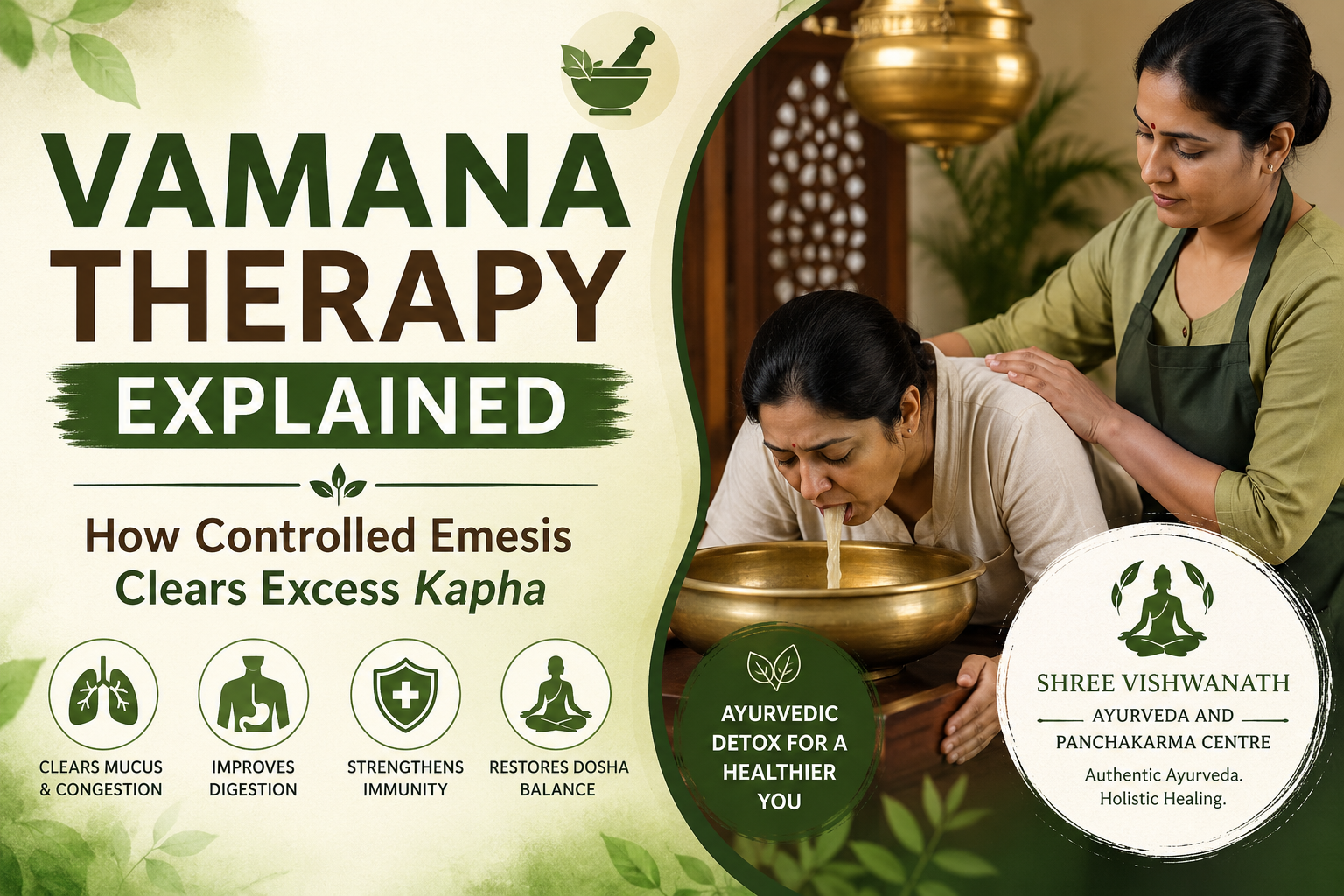
Ayurveda, the ancient Indian system of holistic healing, emphasizes maintaining balance among the three doshas—Vata, Pitta, and Kapha. When these doshas become imbalanced, various health problems can arise. One of the most effective Ayurvedic detoxification therapies for balancing excess Kapha is Vamana Therapy, also known as therapeutic or controlled emesis.
Vamana is one of the five purification procedures included in Panchakarma, a comprehensive detoxification and rejuvenation program in Ayurveda. This specialized treatment is designed to eliminate accumulated Kapha toxins from the body through medically supervised vomiting. Although the concept may seem unusual to some, Vamana Therapy has been practiced safely for centuries and is highly regarded for its ability to restore balance, improve respiratory health, and enhance overall well-being.
At Shree Vishwanath Ayurveda and Panchakarma Centre, Vamana Therapy is performed under the supervision of experienced Ayurvedic practitioners, ensuring personalized care and safe treatment for every patient.
What Is Vamana Therapy?
Vamana Therapy is a controlled and therapeutic process of induced vomiting performed under the guidance of qualified Ayurvedic practitioners. The primary purpose of this treatment is to remove excess Kapha dosha, which mainly accumulates in the stomach, lungs, and upper respiratory tract.
According to Ayurveda, Kapha is responsible for stability, lubrication, immunity, and nourishment. However, when Kapha becomes excessive, it can lead to mucus accumulation, congestion, sluggish digestion, weight gain, allergies, and respiratory disorders.
Vamana Therapy helps expel this accumulated Kapha from the body, thereby restoring physiological balance and promoting better health.
Understanding Kapha Imbalance
Kapha dosha consists of the earth and water elements. It possesses qualities such as heaviness, coldness, oiliness, smoothness, and stability.
Excess Kapha may manifest through symptoms such as:
- Persistent cough and cold
- Sinus congestion
- Excess mucus production
- Allergies
- Asthma and bronchitis
- Lethargy and fatigue
- Obesity and water retention
- Slow metabolism
- Indigestion and loss of appetite
- Excessive sleepiness
When these symptoms persist, Ayurveda recommends detoxification therapies like Vamana to remove the root cause rather than merely suppressing symptoms.
How Does Controlled Emesis Work?
The stomach is considered the primary seat of Kapha dosha. During Vamana Therapy, specific herbal preparations are administered to liquefy and mobilize accumulated Kapha toxins from tissues toward the gastrointestinal tract.
Once the toxins reach the stomach, controlled emesis is induced under medical supervision. This process allows the body to expel excess mucus, toxins (Ama), and aggravated Kapha through vomiting.
The therapy follows a systematic approach:
1. Preparation Phase (Purva Karma)
Before the main procedure, the patient undergoes preparatory treatments that may last several days.
Internal Oleation (Snehana)
Medicated ghee or oils are administered internally to loosen and mobilize toxins stored within body tissues.
External Oleation and Massage
Warm herbal oil massage helps soften tissues and facilitate toxin movement.
Steam Therapy (Swedana)
Herbal steam therapy promotes sweating, liquefies toxins, and channels them toward the digestive tract.
2. Main Procedure (Pradhana Karma)
On the day of Vamana:
- The patient consumes Kapha-aggravating foods such as milk or rice preparations.
- Special herbal formulations are administered.
- Therapeutic vomiting is induced in a controlled environment.
- The practitioner carefully monitors the entire process, including the number of emetic bouts and the patient's overall condition.
The procedure continues until signs indicate adequate elimination of Kapha.
At Shree Vishwanath Ayurveda and Panchakarma Centre, every stage of Vamana Therapy is customized according to the patient's body constitution (Prakriti), medical history, and current health condition.
3. Post-Therapy Care (Paschat Karma)
After Vamana, the digestive system becomes sensitive. Therefore, a special diet plan is prescribed, beginning with light foods and gradually progressing to a normal diet.
Patients are advised to:
- Take adequate rest.
- Avoid heavy physical activity.
- Follow dietary restrictions.
- Maintain emotional calmness.
- Avoid exposure to cold environments.
Proper post-care is essential for achieving maximum therapeutic benefits.
Health Benefits of Vamana Therapy
Clears Excess Mucus
Vamana effectively removes accumulated mucus from the respiratory and digestive systems, reducing congestion and improving breathing.
Improves Respiratory Health
It is widely recommended for chronic respiratory conditions such as asthma, recurrent colds, bronchitis, and sinusitis.
Enhances Digestion
By eliminating excess Kapha and Ama (toxins), Vamana stimulates digestive fire (Agni), leading to improved metabolism and appetite.
Supports Weight Management
Since excess Kapha is associated with obesity and sluggish metabolism, Vamana may aid in healthy weight management when combined with proper diet and lifestyle modifications.
Strengthens Immunity
Detoxification helps improve immune function and enhances the body's natural resistance against recurrent illnesses.
Improves Mental Clarity
Many individuals experience increased mental alertness, reduced lethargy, and improved emotional well-being following therapy.
Rejuvenates the Body
Vamana restores doshic balance, leaving patients feeling lighter, more energetic, and revitalized.
Conditions Commonly Treated with Vamana Therapy
Ayurvedic practitioners may recommend Vamana for:
- Bronchial asthma
- Chronic sinusitis
- Allergic rhinitis
- Recurrent respiratory infections
- Chronic cough
- Skin disorders associated with Kapha imbalance
- Obesity
- Hyperlipidemia
- Digestive disorders caused by excess Kapha
The suitability of treatment varies according to individual constitution and health status.
Who Should Avoid Vamana Therapy?
Although highly beneficial, Vamana is not suitable for everyone.
The therapy is generally avoided in:
- Pregnant women
- Elderly individuals with severe weakness
- Young children
- Patients with severe heart disease
- Individuals suffering from extreme debility
- People with uncontrolled hypertension
- Those recovering from recent surgery
- Individuals with severe dehydration
A detailed Ayurvedic consultation is necessary before undergoing treatment.
Is Vamana Therapy Safe?
When performed by experienced Ayurvedic physicians in a clinical setting, Vamana Therapy is considered safe and effective. Self-inducing vomiting without proper medical supervision is strongly discouraged, as it may cause complications.
The success and safety of Vamana depend on:
- Proper patient selection
- Thorough preparation
- Correct herbal formulations
- Continuous monitoring
- Appropriate post-therapy care
Therefore, individuals should always seek treatment from qualified Ayurvedic professionals, such as the experts at Shree Vishwanath Ayurveda and Panchakarma Centre
Vamana Therapy is a powerful Ayurvedic detoxification procedure designed to eliminate excess Kapha through controlled emesis. By removing accumulated toxins and mucus from the body, this therapy helps restore doshic balance, improve respiratory function, enhance digestion, and promote overall wellness.
As an integral component of Panchakarma, Vamana addresses the root cause of many Kapha-related disorders rather than simply alleviating symptoms. However, the therapy should always be performed under expert medical supervision to ensure safety and effectiveness.
If you are seeking authentic Ayurvedic detoxification and personalized Panchakarma treatments, Shree Vishwanath Ayurveda and Panchakarma Centre offers expert guidance and holistic care to help you achieve optimal health and long-term wellness.